A production personal finance app built on a simple bet: the reason people overspend is emotional, so the ledger should record the feeling alongside the amount.
Why it mattered
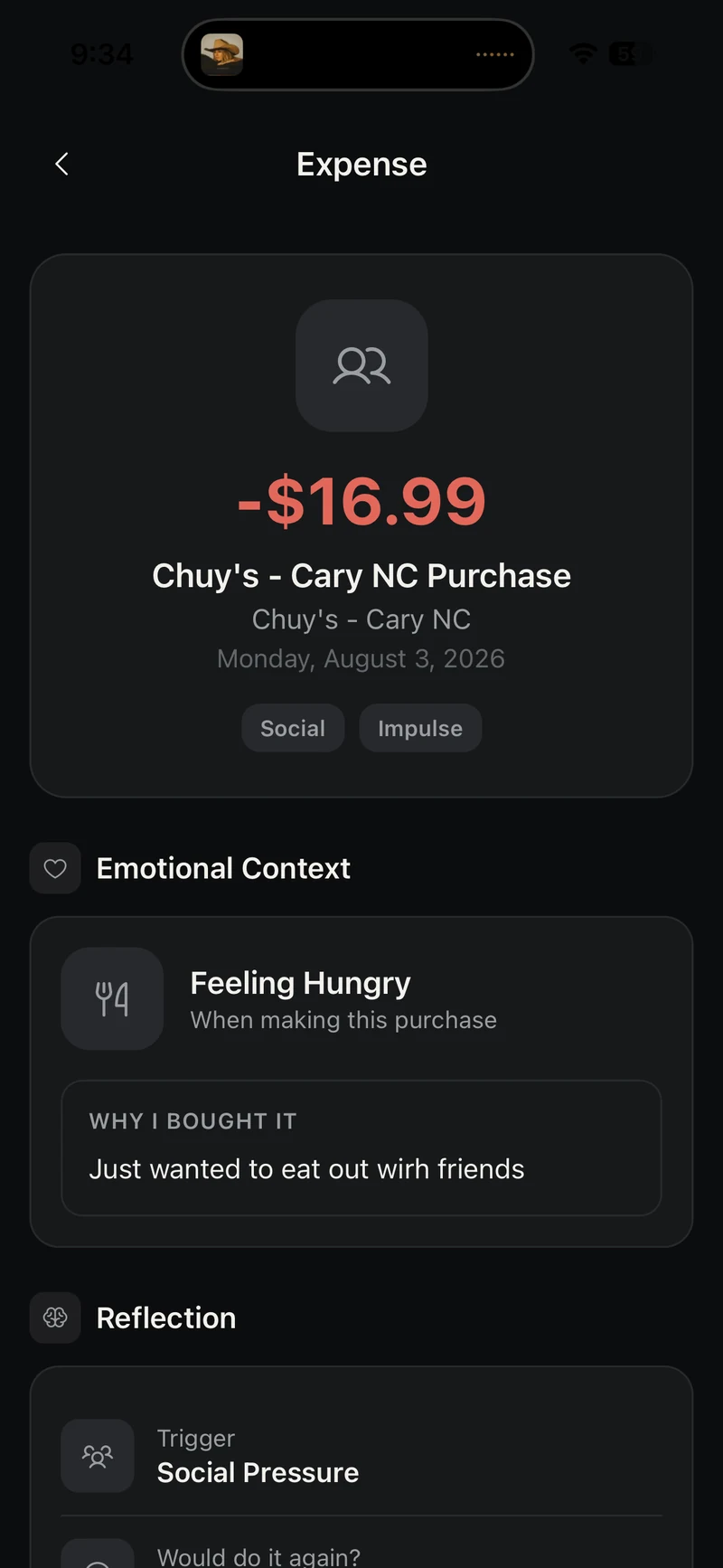
Every budgeting app I tried could tell me I spent $16.99 at a restaurant. None could tell me I did it because I was hungry and my friends were going anyway. That second fact is the one that predicts whether it happens again next week.
The problem
Budgeting apps stop at categorisation. They produce a tidy record of what already happened and no insight into why, which is exactly the part a person needs in order to change anything. I wanted a system that captured the trigger, not just the transaction.
What I built
Emotional ledger: each expense can carry how you felt, why you bought it, and a named trigger (social pressure, stress, boredom), so patterns surface as behaviour rather than as pie charts.
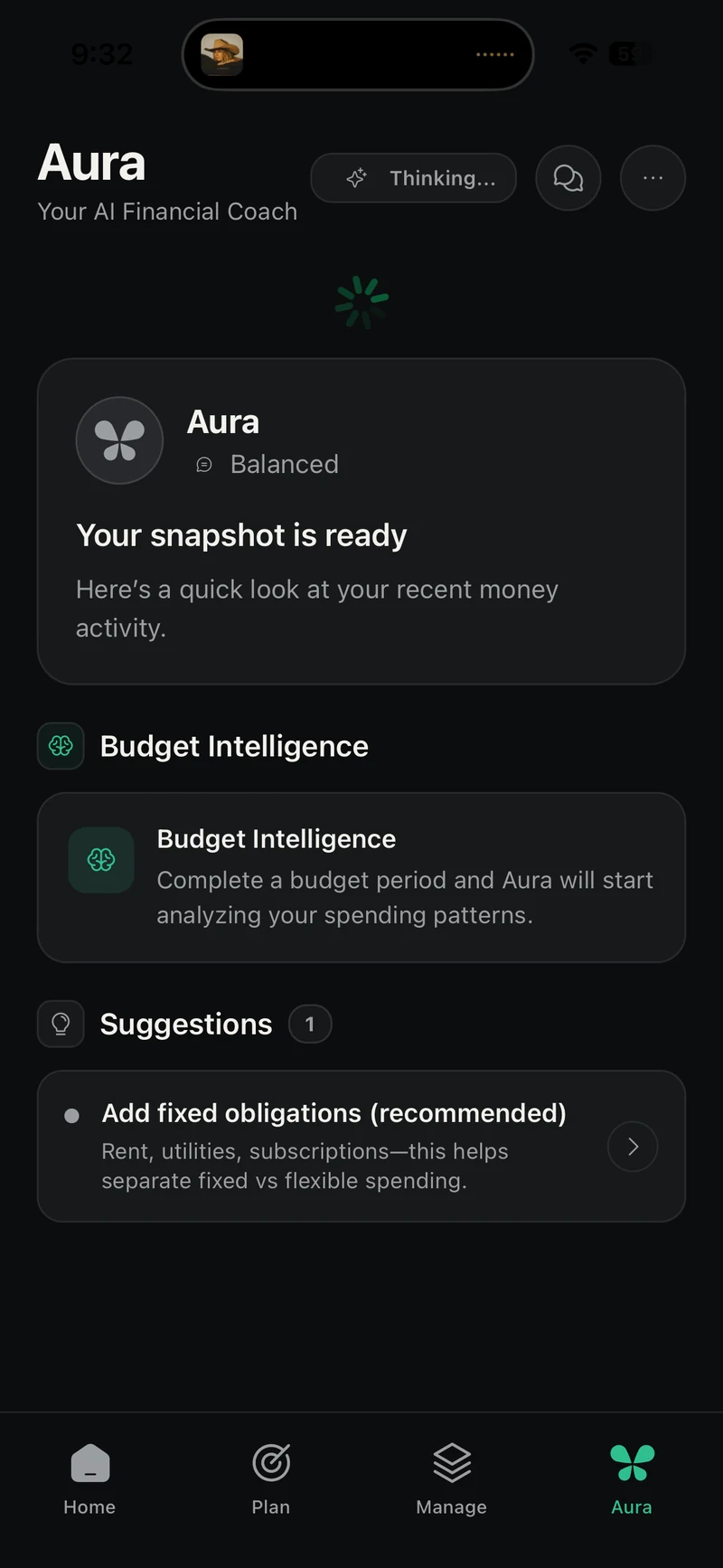
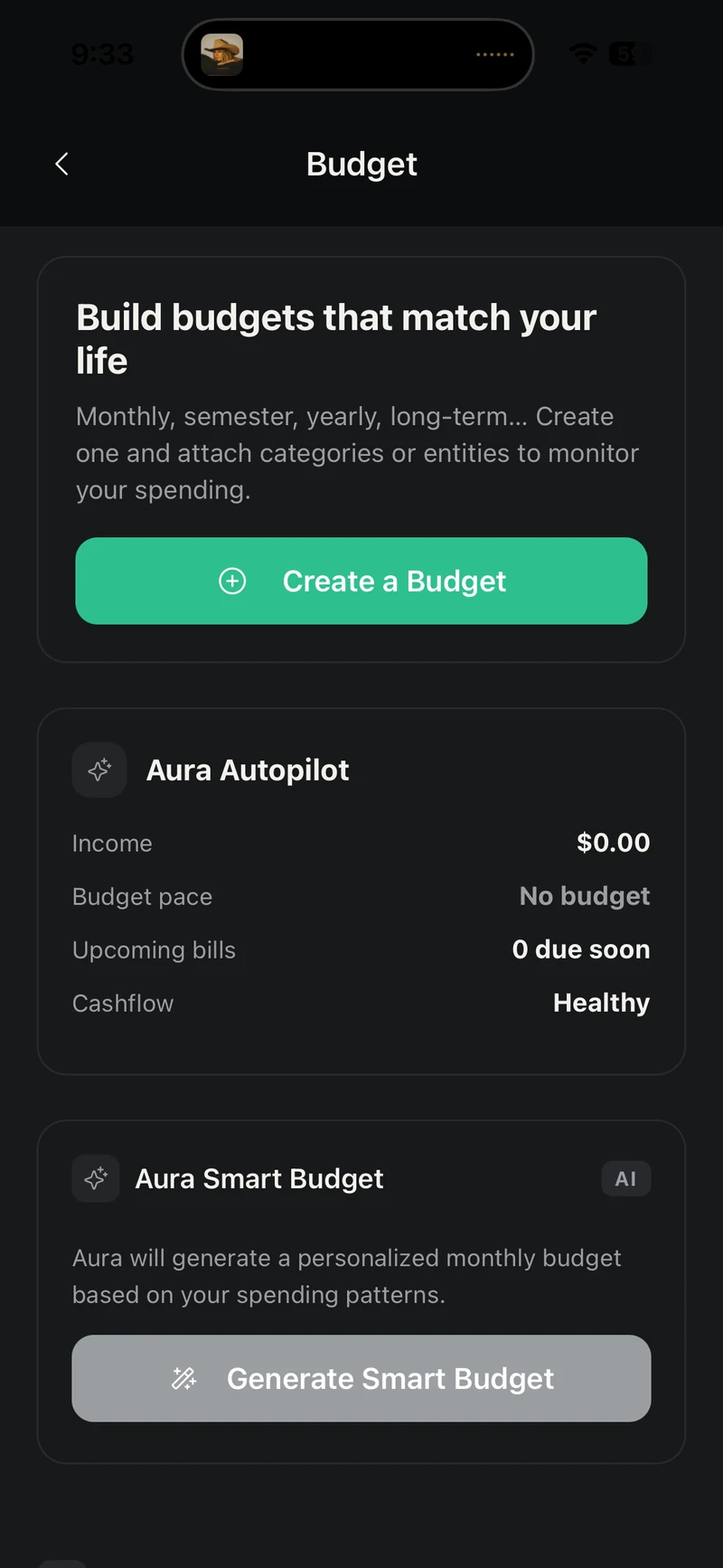
Aura, an AI financial coach on Anthropic Claude, running conversational sessions and generating budgets from observed spending — with tool-forced structured outputs and PII stripped before egress.
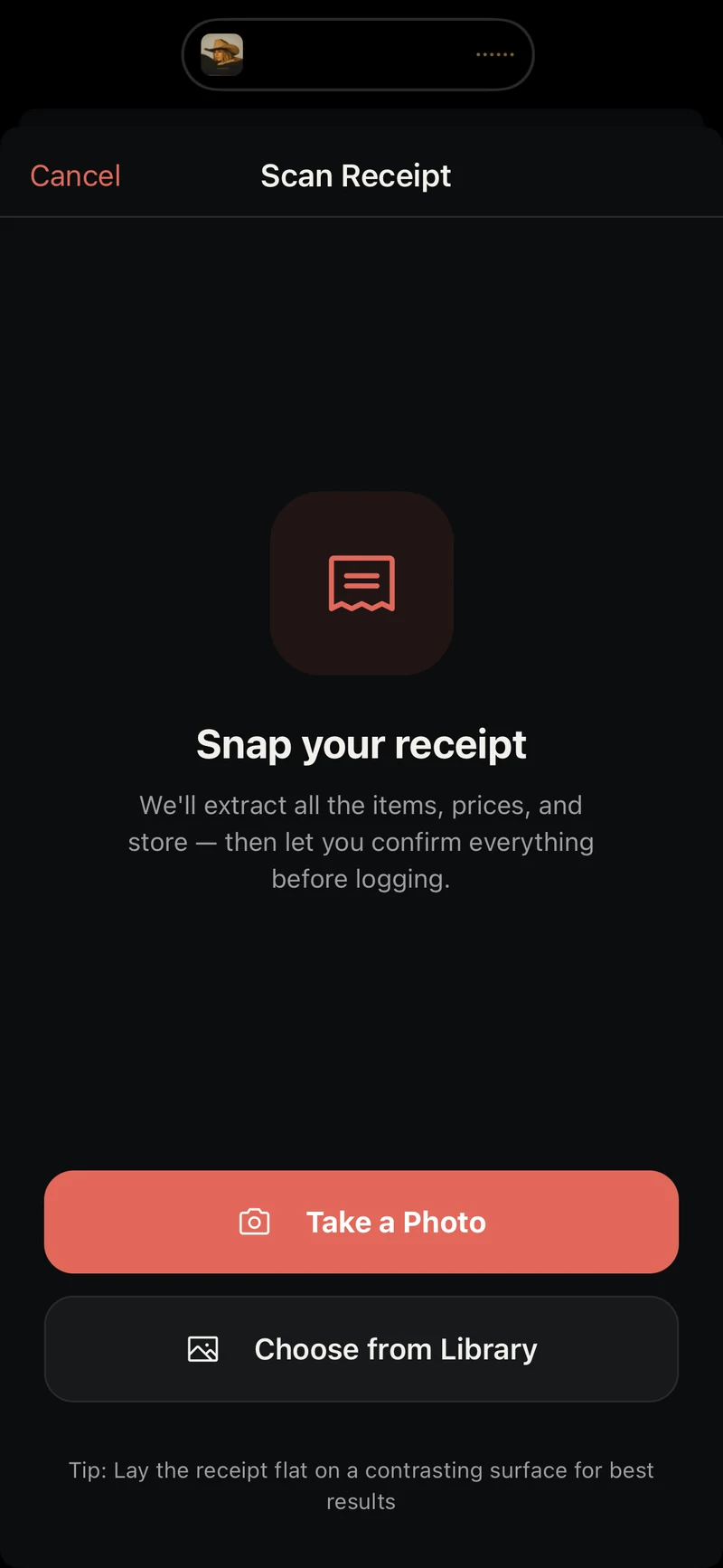
Receipt OCR that extracts line items, prices and merchant from a photo, then asks the user to confirm before anything is written.
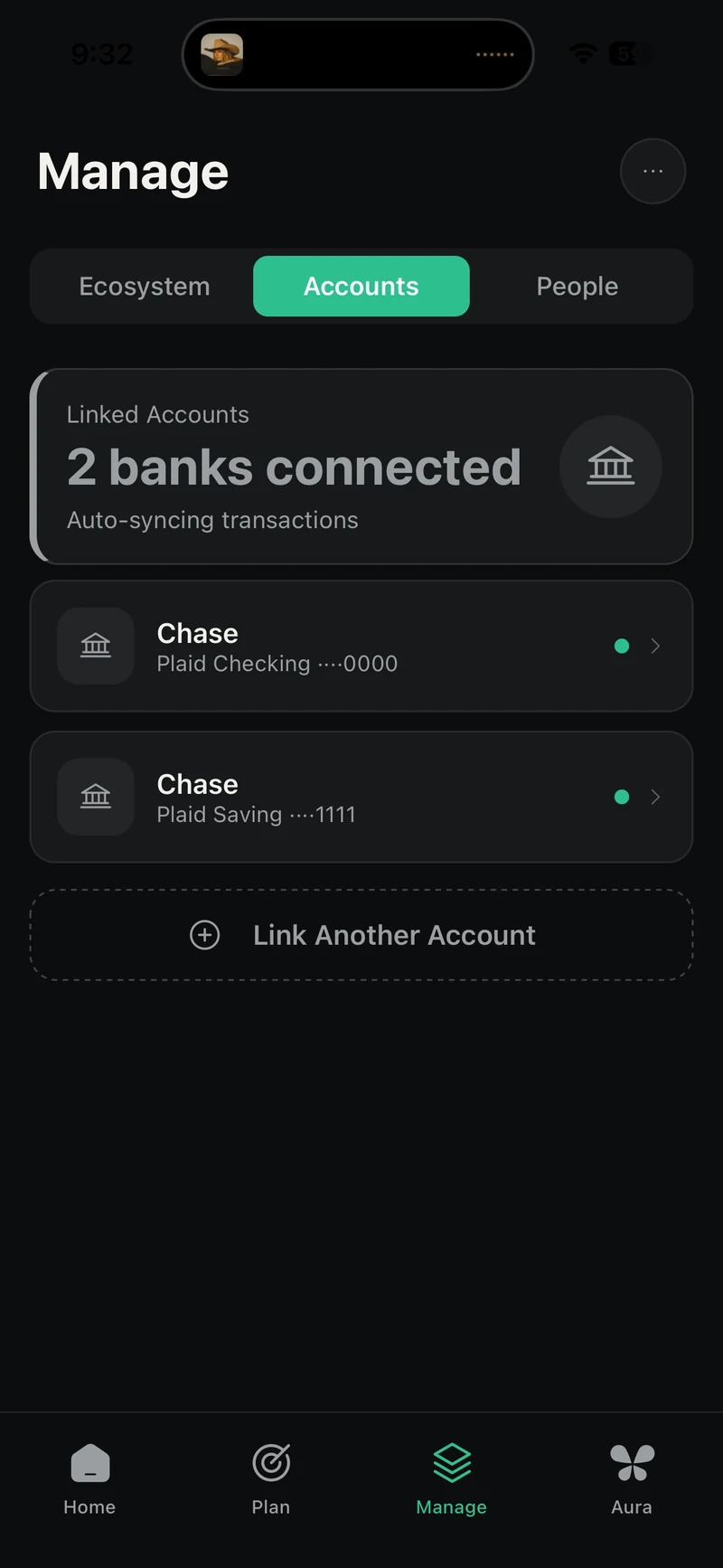
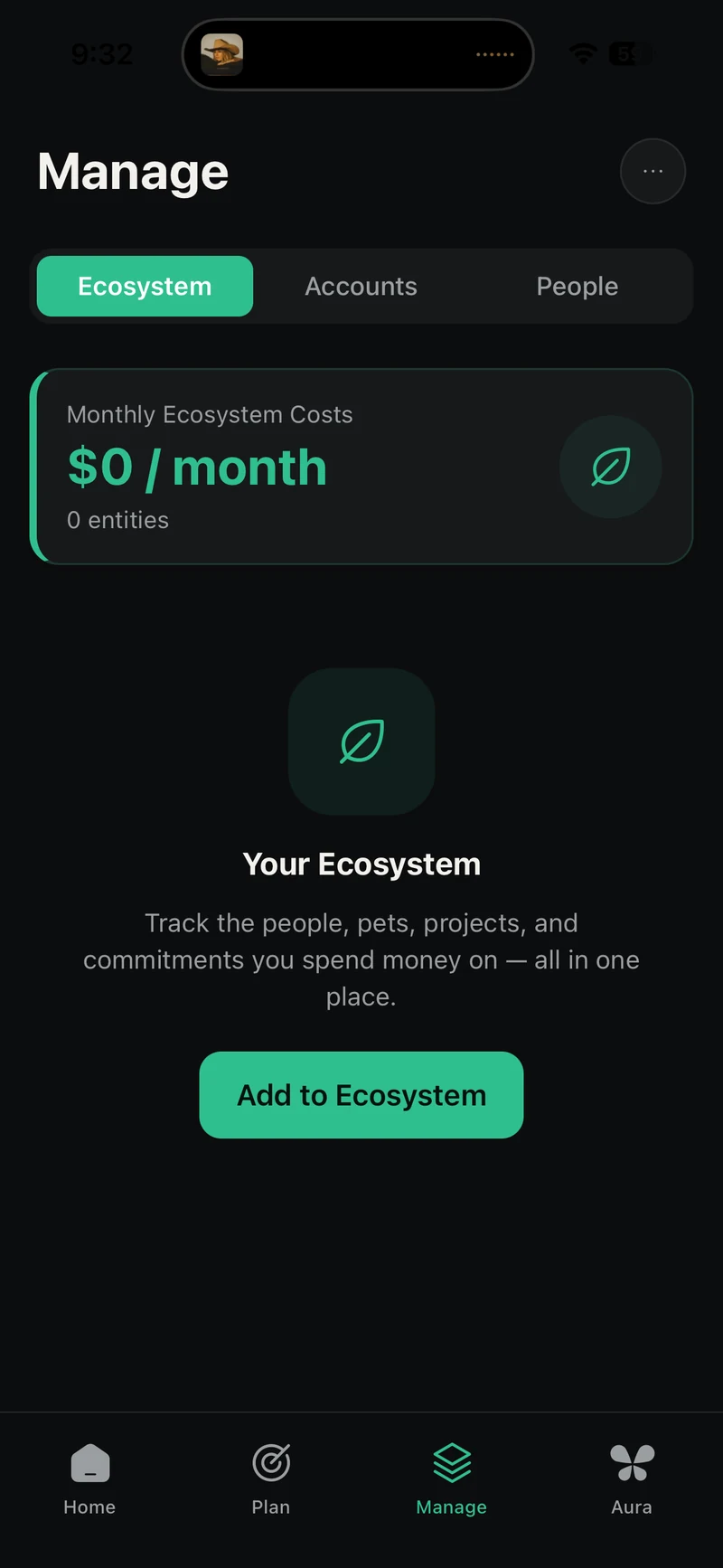
Plaid bank linking with live transaction sync, plus an ecosystem model for the people, pets and commitments money actually flows to.
React Native across iOS and Android with biometric auth, and a FastAPI and PostgreSQL backend with JWT/MFA, row-level security and device-bound sessions across a 29-table schema.
Celery and Redis running timezone-aware financial pipelines and APNS delivery per user.
Inside the app
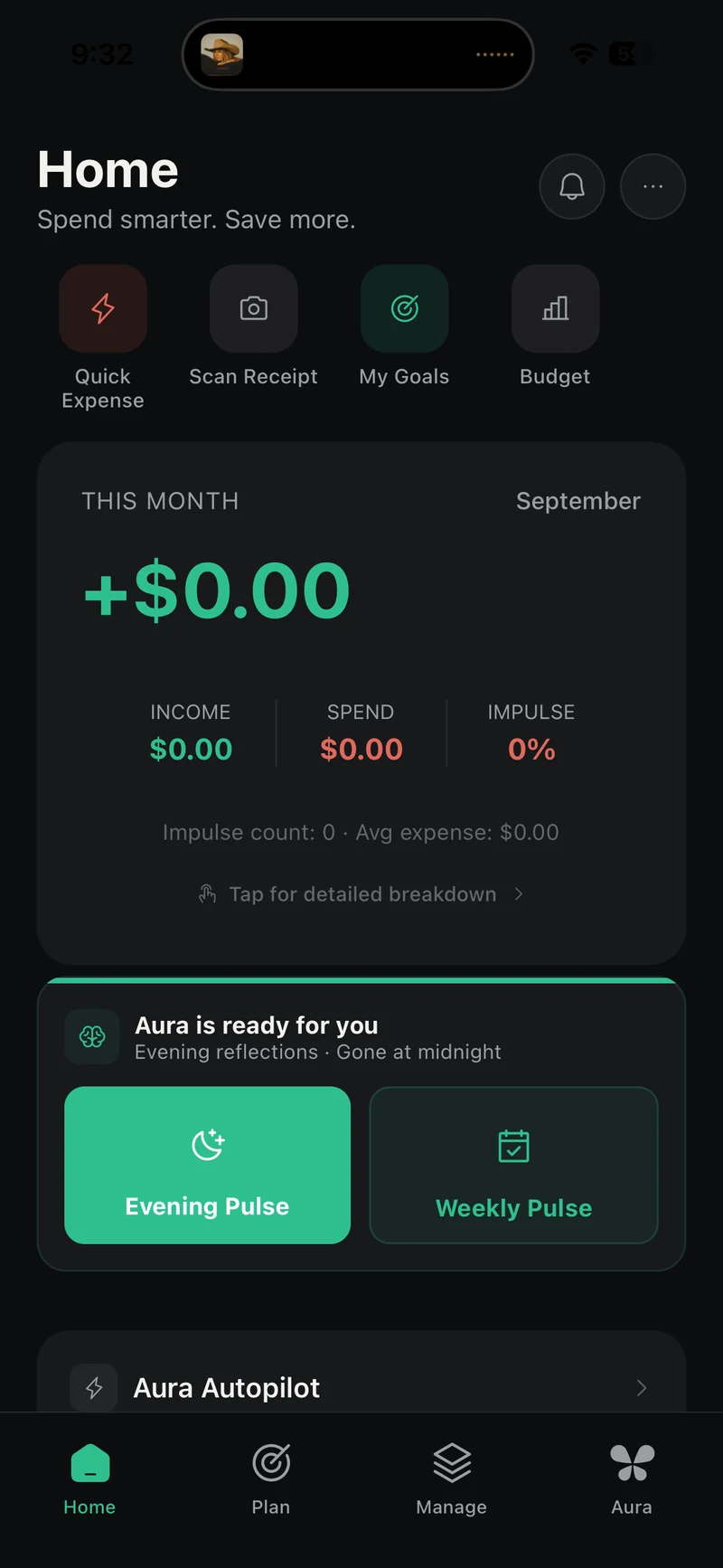
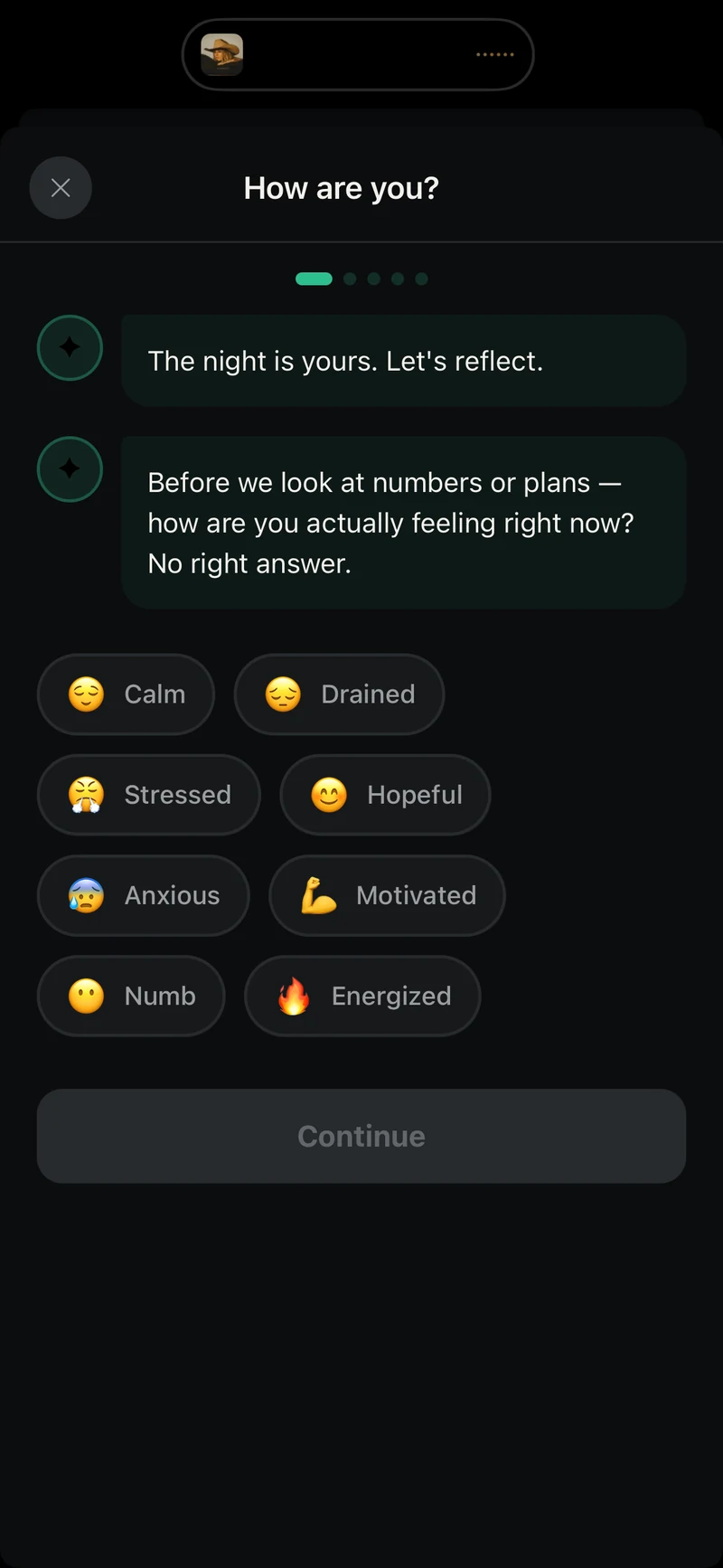
The product in order: the daily surface, the emotional check-in that makes the ledger different, then the coaching and automation built on top of it. Click any screen to enlarge
HomeNet position, impulse rate and the day's coaching prompt on one surface.Emotion check-inAsked at capture time, before the numbers — while the honest answer is still available.Expense reflection$16.99 is the small fact. “Social pressure, felt hungry” is the one that predicts a repeat.Receipt captureOCR pulls items, prices and merchant — the user confirms before anything is written.Aura: budget intelligenceAura reads the month and proposes the next concrete move, not a chart.Aura: coaching sessionA conversation with context on your accounts, not a generic chatbot.Generated budgetsBudgets generated from observed behaviour, then handed back for approval.Bank syncPlaid linking with live transaction sync across connected accounts.EcosystemThe people, pets and commitments money actually flows to, modelled explicitly.
Engineering notes
Asking the question at the right moment
An emotion prompt is worthless an hour later — you have already rationalised the purchase. The check-in fires at capture time, in the same flow as logging the expense, which is the only point where the honest answer is still available.
Privacy before the model call
Emotional and financial data is about as sensitive as a dataset gets. A sanitization layer tokenizes identifying fields before anything leaves for the model, so Aura reasons over shapes and amounts rather than identities.
Failure is a product decision
A circuit breaker wraps every model call. When the provider degrades, the app falls back to deterministic summaries instead of hanging on a spinner — a smaller answer beats no answer.
Timezone-aware money
Recurring cashflows evaluate in the user's local timezone, not the server's. Celery schedules per user rather than as one nightly global sweep, which is what makes a 'rent posts tomorrow' notification arrive at the right hour.
Curious about any of this?
I am glad to go deeper on the architecture, the tradeoffs, or the parts that did not work
the first time. That conversation is usually more useful than the README.