Optimizing for the returning visitor
Most guests are not new. Indexing and pre-resolving returning visitors is what turned a 60-second form into a sub-10-second confirmation, which is where nearly all the real-world time savings came from.
A full-stack visitor management platform for university housing, replacing paper forms and scattered spreadsheets.
This one ran in production with real staff depending on it. Nothing teaches you about edge cases like a front-desk clerk using your software at 2am during move-in weekend.
Guest registration ran on paper forms and disconnected spreadsheets. A question as basic as "who is currently checked in?" meant digging through several systems, and peak traffic turned that into a queue at the desk.
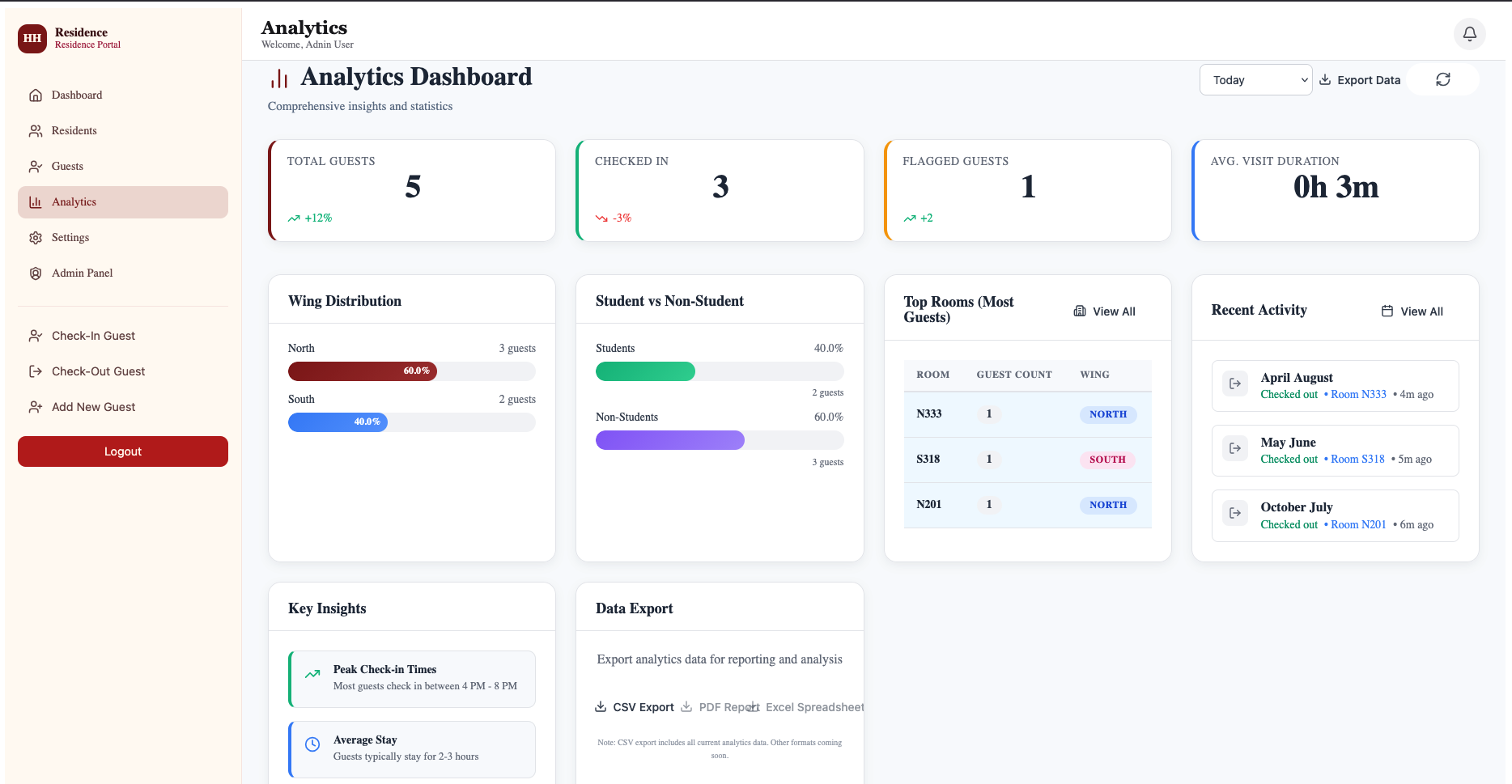
The dashboard front-desk staff actually worked from during move-in weekend. Click any screen to enlarge
Most guests are not new. Indexing and pre-resolving returning visitors is what turned a 60-second form into a sub-10-second confirmation, which is where nearly all the real-world time savings came from.
Checkouts cluster — everyone leaves at once. A batch checkout path handles the whole group in under 7 seconds rather than forcing the clerk through one record at a time.
I am glad to go deeper on the architecture, the tradeoffs, or the parts that did not work the first time. That conversation is usually more useful than the README.